



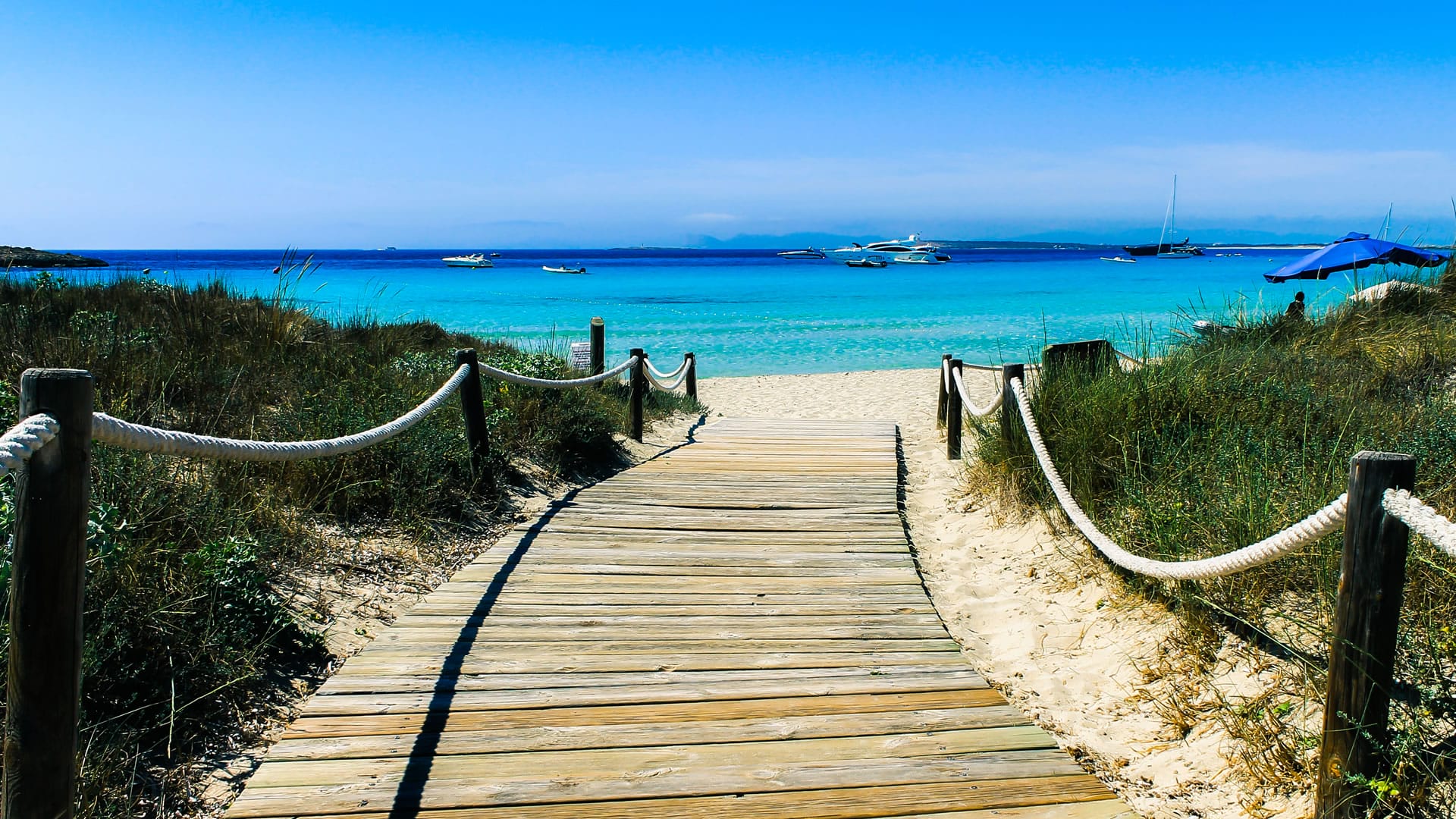
Barbecue in Formentera: everything you need to know about the seasonal ban
Formentera is an island of extraordinary natural beauty: Mediterranean scrub, fragrant pine forests, Posidonia dunes, and a rural landscape that over the centuries has intertwined with spontaneous vegetation in an almost indissoluble way. It is precisely this environmental richness that makes strict regulations on wildfire prevention necessary. Those who live on the island, those who spend their holidays there, or those who own a property must know that every year, for about six and a half months, there is an absolute ban on lighting fires outdoors, barbecues included. Knowing this rule in detail is not just a civic duty: it is an act of respect towards a unique territory in the world.
The prohibition period: from April 1st to October 15th
The current regulations in the Balearic Islands, and specifically in the Pitiuses — that is, Ibiza and Formentera — establish that the so-called “época de peligro alto de incendio forestal,” meaning the period of high risk of forest fires, begins on April 1st and ends on October 15th. It is important to emphasise that for the Pitiuses this period begins earlier than for Mallorca and Menorca, for which the official start date is May 1st. The reason for this difference is climatic: Ibiza and Formentera are exposed earlier to spring drought and typical wind conditions that accelerate the dehydration of vegetation. The Balearic authorities, taking these factors into account, have placed the Pitiuses in an early risk category.
During this entire period — which extends for more than six months — it is prohibited to light any type of fire near forested areas, in public recreational areas, and in rural zones not explicitly authorised. The barbecue, in any form it may take — charcoal, wood, with traditional embers — fully falls under this category of activities prohibited during the danger period.
What exactly does the regulation say
The regulatory framework is Decree 125/2007, dated October 5, with which the Government of the Balearic Islands established the rules on the use of fire and regulated activities likely to increase the risk of forest fires. This is complemented by the “Alerta Foc” system, a daily tool for monitoring and classifying meteorological fire risk, managed by the Forest Management Service of the Directorate General of Natural Spaces and Biodiversity. Every day, an updated alert level map is published — ranging from Alerta Foc 1 (low risk) to Alerta Foc 4 (very high or extreme risk) — which dynamically determines the applicable restrictions based on the day’s weather conditions.
In summary, during the danger period — from April 1 to October 15 — it is prohibited to light fires within 50 meters of forested land and in all recreational areas of the archipelago. For any agricultural burning activities on lands located less than 500 meters from forested areas, a specific administrative authorisation is required. In the event of Alerta Foc 4, all previously granted permits are automatically suspended.
Formentera’s vulnerability to fires is a consequence of its unique environmental characteristics.
The island has a small area — just over 83 km² — but it hosts a variety of precious ecosystems: the Mediterranean scrub, the wooded areas in the inland regions and on the promontories like La Mola, the meadows of Posidonia oceanica behind the coasts, the traditional agricultural lands, and the protected coastal strip of the Natural Park of the Salinas of Ibiza and Formentera.
Mediterranean vegetation, characterised by plants such as rosemary, mastic, juniper, and pines, contains a high amount of resins and essential oils that become highly flammable under dry conditions. Summer in Formentera brings with it months of almost total drought, temperatures often exceeding 30 degrees, and, at certain times, the west wind and the tramontana that further lower the relative humidity. In these conditions, a single spark—a discarded ember, a fire lit too close to the brush—can ignite a fire capable of spreading with impressive speed.
Local memory still bears the scars of past fires that have devastated significant areas of the island. The threat isn’t just a possibility; it’s something the Formentera community faces each summer. Fire restrictions are the primary tool the authorities have to prevent disasters.
Does the ban also apply to private property?
This is the question that homeowners and villa owners in Formentera often ask themselves, especially those who are used to organising summer barbecues outdoors as the quintessential social gathering. The answer is essentially yes, with some important clarifications.
The ban on lighting fires during the danger period applies to any forest land and areas less than 50 meters from it. Formentera, due to its configuration and the dense presence of scrub and pine forests, has many areas where this distance can easily be exceeded without the owner realising it. A villa immersed in greenery, a finca with a garden full of trees, a panoramic terrace surrounded by vegetation: In all these cases, great caution is required, because the proximity to the Mediterranean scrub is often greater than it appears to the naked eye.
It is important to clarify that public recreational areas equipped with barbecues are also subject to the ban during the danger period, regardless of their intended use. This means that the island’s picnic areas remain accessible for stopping and relaxing, but not for using fire during the critical months.
When can you light up the grill in Formentera? The good news is, the ban isn’t here to stay.
Starting from October 16th and until March 31st of the following year, the danger period ends, and with it, the seasonal restrictions related to the risk of forest fires cease. During this period — late autumn, winter, and spring until the end of March — it is once again possible to organise outdoor barbecues and grills, of course, in accordance with good safety practices and any local municipal ordinances.
This means that those who stay in Formentera in the autumn or winter, or those who own a property on the island and spend the off-season months there, can enjoy the tradition of outdoor grilling without falling foul of the seasonal ban. Formentera in autumn and winter has its own charm: the air becomes cooler, the colours of the Mediterranean scrub transform, the beaches are silent, and the Mediterranean light takes on golden hues that make the island even more enchanting. An outdoor dinner with a lit grill during those months is an authentic and fully permitted experience.
The penalties for those who do not comply with the ban
Failure to comply with the ban is no trivial matter: the penalties provided by Balearic regulations are significant. The Law 43/2003, concerning mountains, and subsequently modified by Royal Decree Law 15/2022, categorizes the unauthorized use of fire as an administrative violation.
Monetary fines can be very high, and in cases of wilful misconduct or gross negligence that causes an actual fire, the criminal consequences can be even more severe.
The control is exercised by the Environment Agents of the Ministry of Agriculture, Fisheries, and Natural Environment, the Forestry Carabinieri, and the local police forces. During the summer months, the number of inspections increases significantly, as does the sensitivity of the authorities to any reports of smoke or uncontrolled fire.
It is therefore essential that anyone who finds themselves in Formentera — tourist, resident, or owner — knows the dates of the ban and strictly adheres to them. It’s more than just dodging a penalty; it’s about safeguarding a delicate environment and a natural legacy that belongs to everyone.
How to Act Responsibly
Beyond the official regulations, there are certain practices that anyone visiting Formentera during the summer should embrace.
First of all, it is advisable to check the Alerta Foc level published daily on the official portal of the Balearic Government (alertafoc.caib.es), in order to stay updated in real-time on the risk conditions. Even during periods when barbecuing would theoretically be allowed (for example, in urban areas far from brush), an Alerta Foc level 4 entails an absolute ban throughout the territory.
Secondly, it is important never to leave embers or hot ashes unattended, even in fixed stone barbecues located in private gardens. The embers that are thought to be extinguished can reignite even hours later with a simple gust of wind. It is always necessary to thoroughly douse the ashes before leaving.
Throwing cigarette butts out of a car window or from a terrace is a behaviour that may seem trivial but can be devastating in certain contexts. Similarly, private fireworks — often lit during parties or weddings in villas — are subject to very precise restrictions near wooded areas and must be handled with the utmost caution.
Inform yourself before arriving: a duty of every visitor
Formentera receives hundreds of thousands of tourists every year, many of whom arrive with the idea of organising barbecues on the beach or on the terrace of the rented villa. Often, they are unaware of local restrictions simply because the information does not reach the channels through which they book their stays. That is why those who rent a property in Formentera — whether as owners or real estate agencies — have the moral responsibility, and in some cases even the legal obligation, to inform guests about the current regulations.
A well-informed guest is not just a rule-abiding guest: is also a guest who does not have to face sanctions or, worse, the responsibility of having caused environmental damage. Preventive information is therefore an added value that enhances the quality of hospitality.
What to do instead of barbecuing during the summer
The barbecue ban should not be seen as a limitation to conviviality, but rather as an encouragement to discover equally enjoyable alternatives. Formentera offers a series of restaurants and beach kiosks — the so-called chiringuitos — where you can enjoy fresh fish, grilled meat, and local specialities prepared in professionally equipped environments and in full compliance with fire safety regulations.
Many restaurants on the island have panoramic terraces or gardens where outdoor dining becomes an unforgettable experience, without the risks associated with using fire in uncontrolled settings. The gastronomic offerings of Formentera have grown significantly in recent years, with a strong focus on local products, Mediterranean fish, and wines from the Pitiuse Islands.
For those who still wish to cook outdoors in their villa or rental property, a practical and fully permitted solution during the fire risk period is the use of outdoor electric hot plates or gas barbecues with flame control systems, provided they are located at a sufficient distance from any wooded area. It’s wise to review your property’s particulars, and if you’re unsure, it’s best to ask the local authorities or your rental manager.
Formentera’s approach to environmental protection is evident in its temporary barbecue bans, implemented when the fire risk is high. This measure is just one facet of the island’s growing dedication to preserving its natural surroundings.
The island was the first in the Mediterranean to ban the use of single-use plastic containers on its beaches, has adopted strict policies to limit vehicular traffic during the summer, and has significantly invested in the protection of Posidonia oceanica, the precious root system that protects its coasts.
Respect for the territory is one of the main reasons why Formentera still maintains a very high environmental quality today, which clearly distinguishes it from many other tourist destinations in the Mediterranean. Those who choose Formentera — whether as a vacation destination or as a place to invest in real estate — find themselves in a context where ecological sensitivity is not an option but a shared value, deeply rooted in the local culture and institutional policies.
Doing your part by respecting the barbecue ban during the summer months is therefore not a sacrifice: it is each person’s personal contribution to the preservation of this extraordinary natural heritage.
Summary: dates and rules to keep in mind
To clarify and provide a quick reference for residents and visitors, it is useful to recap the fundamental points of the regulations. The period of prohibition for barbecues and any type of outdoor fire near forested areas runs from April 1 to October 15 each year, starting earlier than in Mallorca and Menorca due to the specific climatic conditions of the Pitiuses. During this period, it is prohibited to light fires within 50 meters of any forested area and in all public recreational areas. For agricultural activities that involve burning on land less than 500 meters from forested areas, a specific administrative authorisation is required.
The Alerta Foc system monitors meteorological risk every day and can impose additional restrictions even outside of fixed seasonal constraints. In the event of Alerta Foc 4, all previously granted permits are automatically suspended. The penalties for violating the ban are severe and can include criminal consequences in cases of intent or gross negligence.
From October 16 to March 31, the seasonal ban is lifted and barbecuing is allowed again, in accordance with local ordinances and common safety regulations.
Knowing these rules is the first step to living in Formentera responsibly and consciously, protecting a territory that is, in every sense, a common good of inestimable value.