



Formentera has its own rhythm. A slow breath that follows the seasons more distinctly than any other island in the Mediterranean. Those who know it well know that there is not just one face of Formentera: there’s the summer one, the winter one, and then there’s the spring one — perhaps the most authentic, the most interesting, the most underrated. Starting in May, the island transforms, gradually but noticeably. The gates reopen, people return, the sea regains its color. But what really changes, and what can one expect if they decide to visit it during this period?
The island that wakes up: Formentera’s weather in the spring The temperatures rise gently, the sun returns to take center stage, and the days lengthen to offer sunsets that in the height of summer would be overwhelmed by the crowd. In May, temperatures remain steadily between 18 and 24 degrees, with peaks in the central weeks of the month that can reach 26 or 27 degrees during the hottest hours. The wind, still present especially in exposed areas like Migjorn and La Mola, begins to calm down as June approaches.
The sea in May has not yet reached summer temperatures, but those who are used to swimming in the Adriatic will have no problem. The water settles around 19-21 degrees, crystal clear precisely because the tourist season has not yet fully kicked in and the beaches are almost deserted.
Crowd-free beaches: the privilege of spring
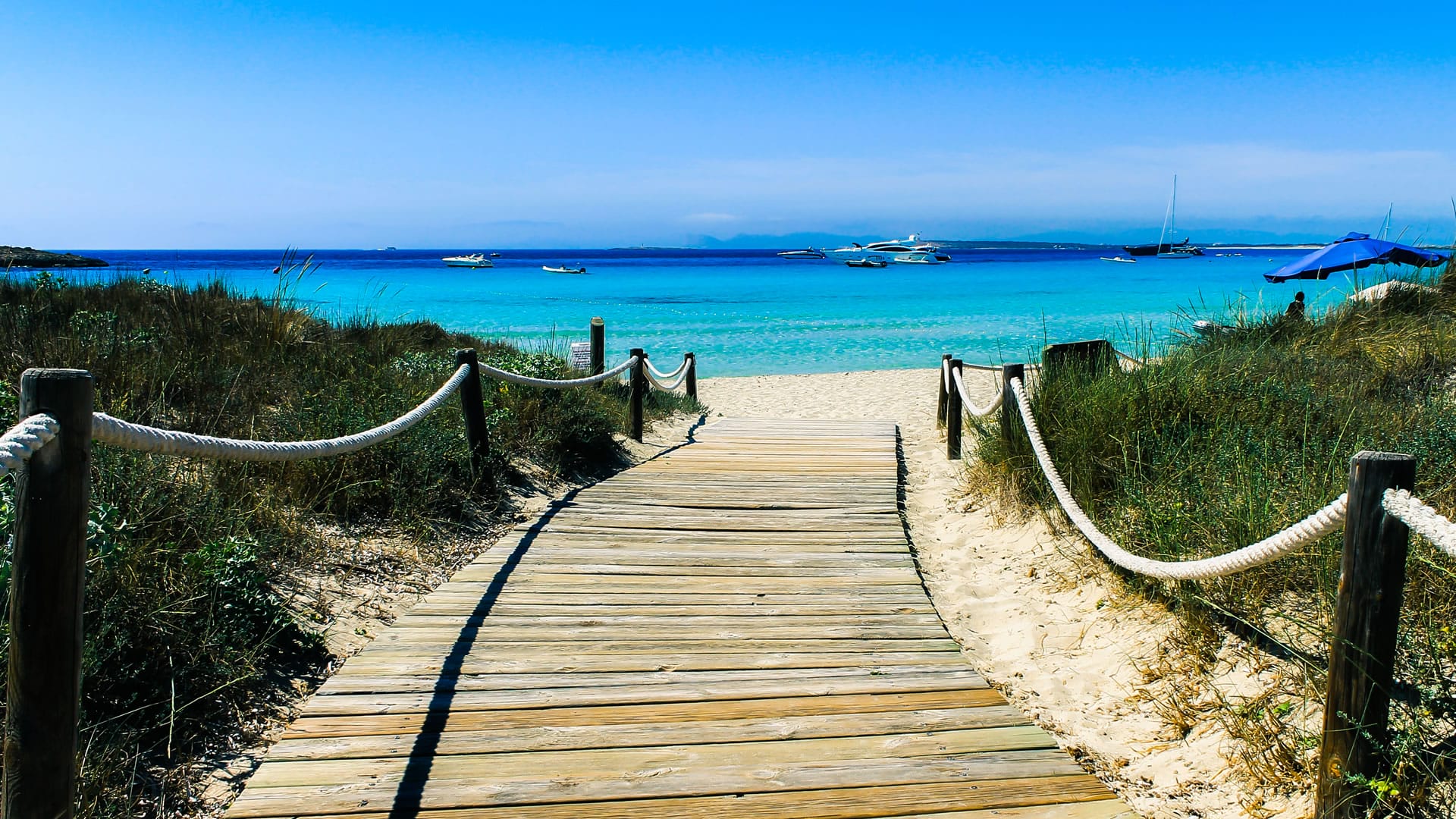
One of the most appreciated aspects by those who visit Formentera in May is the possibility of experiencing the beaches in a completely different way compared to summer. Illetes, which in August becomes one of the busiest beaches in the Balearics, in May can be walked for kilometers with very few people around. The white sand and the famous seagrass that keeps the seabed so crystal clear can be admired without distractions, without background music, without having to arrive at dawn to find a spot.
Ses Illetes and Llevant, two of the island’s most iconic beaches, also offer an almost unreal spectacle in May. The colors of the sea — turquoise, aquamarine, deep blue — seem even more intense when there are no umbrellas to interrupt the view. It’s the ideal time for those who love snorkeling, exploring the seabed without having to queue or wait for the currents of boats to calm down.
What opens again in May: restaurants, venues, and services
The main difference between April and May is that the island is slowly reopening. In April, many businesses are still closed, ferries run on limited schedules, and bike and scooter rentals are hard to come by. In May, all of this changes.
Restaurants begin to reopen their doors, starting with the most historic and established ones, and then gradually all the others. The beach bars, which are one of the most typical experiences of Formentera, are back in operation with their fresh fish menus, sunset cocktails, and terraces overlooking the water. Not all the establishments will be fully operational in the first week of May, but by mid-month the gastronomic offerings will already be very rich and varied.
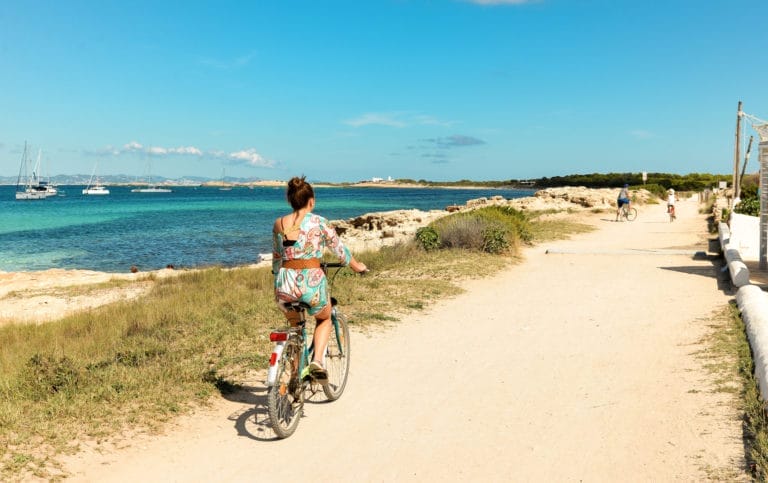
Tourist services are gradually being reactivated: Bike and scooter rentals are back in full swing, boat excursions are resuming, and kitesurfing and paddle surfing schools are opening for the new season. The hippie market of El Pilar de la Mola — one of the most characteristic events on the island — resumes its weekly opening schedule.
The ferries from Ibiza: frequencies and prices in spring
To reach Formentera, it is necessary to board in Ibiza: there are no direct flights to the island, and the ferry crossing is an integral part of the experience. In May, the maritime connections between Ibiza and Formentera increase significantly compared to the winter months, with more daily trips and more convenient schedules for both the outbound and return journeys.
The companies operating the route — mainly Baleària and Trasmapi — update their schedules starting in May to accommodate the increase in demand. The crossing takes between 25 and 40 minutes depending on the type of vessel. The cost of a round-trip ticket currently hovers around 60.60 euros per person, an amount that should be considered when planning the travel budget, especially for families.
The atmosphere of May: between authenticity and the first tourists
May is the month when Formentera still partly belongs to its residents. The locals reclaim the spaces, the bars at the port of La Savina fill up again with familiar faces, and the island’s pace is still slow and human. At the same time, the first tourists of the season arrive — generally conscious travelers, nature enthusiasts, couples seeking tranquility, cyclists, and sailors. Not yet the crowds of July and August, but a presence sufficient to give the island that necessary life to enjoy it fully.
It is in this balance that Formentera perhaps expresses its truest version. Not the glossy version of the high season, not the almost melancholic silence of winter, but something in between: a lively island, accessible, still generous to those who chose to arrive before the others.
June is the month when summer really starts. The temperatures rise steadily, the sea becomes warmer and more inviting, and the influx of tourists grows noticeably each week. By the end of June, Formentera is already in full season: all the venues are open, the ferries are running at full speed, the beaches are starting to come alive.
Those who want to enjoy the best of both worlds — summer warmth with still a bit of space — have everything to gain by choosing the last weeks of May or the first of June. In that precise moment, Formentera offers an experience that few other places in the world can provide: a summer that begins slowly, without haste, with the sea in front and almost no one around.