



Prefabricated Houses in Formentera: Is It Possible?
Modular constructions, steel and wood structures, houses assembled in a few weeks. The market for prefabricated houses is growing across Europe, and many are wondering if this solution is applicable to Formentera as well. The answer is not simple — but it is worth understanding it thoroughly.
First Question: Can You Build in Formentera?
It is the mandatory starting point. And the answer is: rarely, and with very specific constraints. Formentera is one of the most protected islands in Europe from an urban and environmental standpoint. About 70% of the territory is classified as a protected natural area. The Island Territorial Plan regulates in an extremely restrictive manner where, how, and how much can be built, with the explicit aim of preserving the landscape and preventing the cementification that has devastated other Mediterranean destinations. Those who want to build a house from scratch — whether prefabricated or traditional — face a long, complex, and in most cases impractical process. The vast majority of real estate interventions on the island involve renovations of existing buildings, not new constructions. This applies to any type of construction. And it is particularly true for prefabricated houses.
What Does the Regulation Say About Prefabricated Houses?
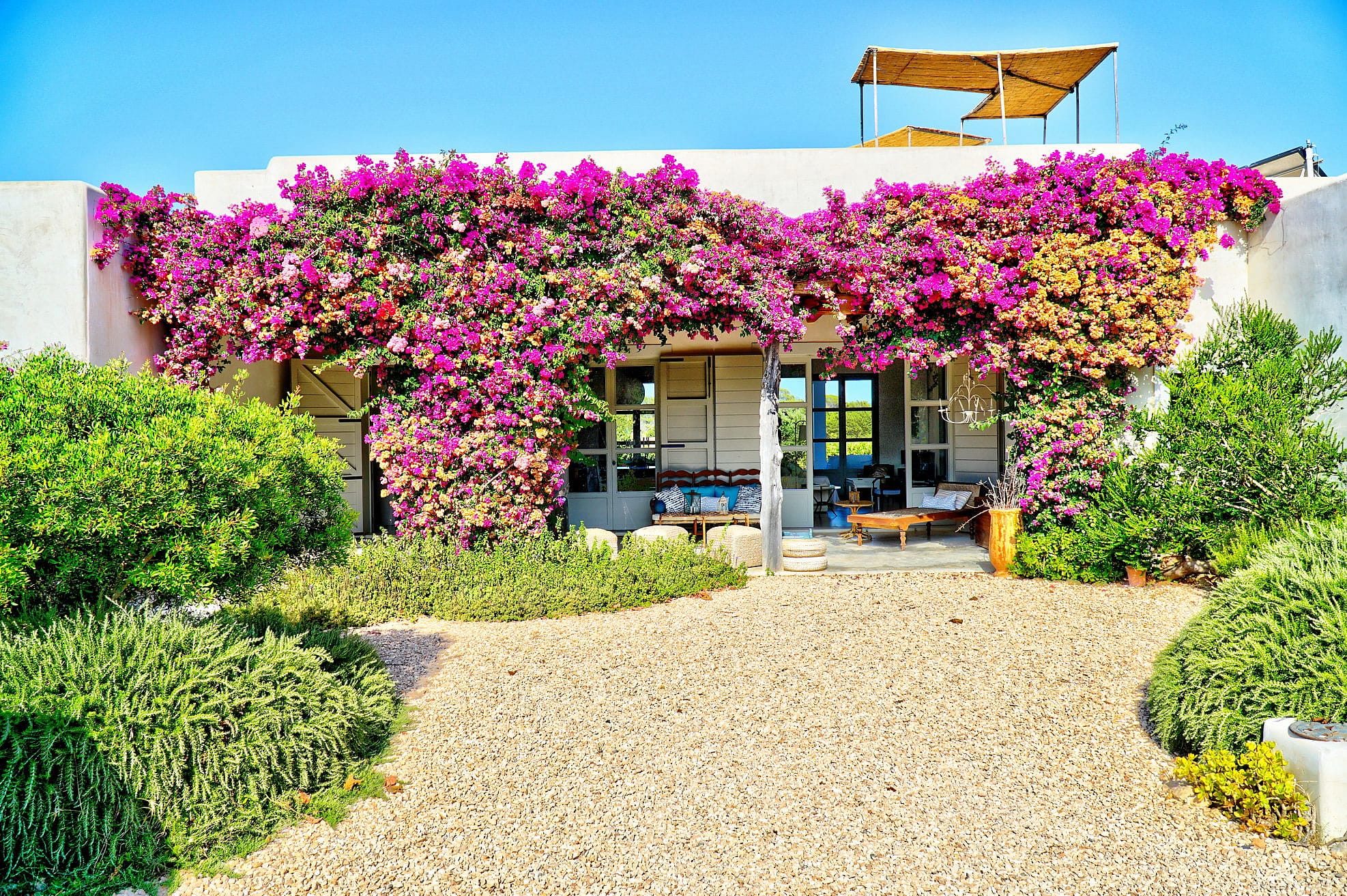
In Spain, prefabricated constructions do not enjoy separate regulatory treatment compared to traditional construction. There is no preferential lane, there are no bureaucratic simplifications related to the type of construction. A prefabricated house must meet exactly the same requirements as any other building: building permit, compliance with urban planning regulations, land classification compatible with residential use. In the Balearic Islands, and even more so in Formentera, a combination of local, insular, and regional regulations applies, making each project a unique case. The visual impact, landscape integration, and compliance with permitted volumes are elements that local authorities evaluate with great attention — and that can make the difference between an approved project and a rejected one. The fact that a structure is prefabricated, in this context, does not help. In fact, in some cases it can represent a disadvantage: the authorities tend to favour architectural solutions consistent with the local identity, and a modular structure made of steel or composite panels hardly fits into the landscape of stone and white lime that characterises the island.
Where Prefabricated Buildings Find Their Place
Having said all this, there are situations where prefabricated constructions can find practical application in Formentera.
Accessory Structures
The most common case concerns accessory structures. Dependances, service rooms, garages, small support structures for an already existing main building: in these contexts, a quality prefabricated solution can be considered — provided it respects the permitted volumetric limits and is designed with attention to visual impact.
Replacement of Existing Structures
A second scenario concerns the replacement of existing structures. If there is already a building on a developable plot of land, in some cases it is possible to demolish it and reconstruct within the same volumes and shapes. In this context, a high-quality prefabricated building — designed by a local architect with experience in island regulations and landscape integration — can be a feasible solution. Not simple, not guaranteed, but feasible.
Temporary Installations
The third scenario is that of temporary installations. Non-permanent structures, lacking fixed foundations, intended for seasonal use: even in this case, the Balearic regulations provide specific procedures, but possibilities exist.
The Real Problem: The Logistics
Even assuming a favourable regulatory context, building with prefabricated elements in Formentera presents a concrete challenge that is often underestimated: the logistics. Everything that arrives on the island passes through the port of La Savina. The prefabricated modules — which by definition are produced elsewhere and transported to the site — must be loaded onto ferries, unloaded at the port, and transported overland to the construction site. Heavy vehicles on the island are limited, the roads in many areas are narrow, and permits for exceptional transports require time and coordination. This does not make a prefabricated project impossible, but it significantly impacts costs and timelines. What in other parts of Europe represents an economic and speed advantage over traditional construction, in Formentera is reduced — or in some cases completely nullified.
What Is Advisable to Do in Practice
If your goal is to have a property in Formentera, the most realistic and convenient path remains the purchase and renovation of an existing property. The market offers traditional fincas, apartments, and villas in various conditions and price ranges. Intervening on an existing structure — even significantly, with a complete renovation — is a regulatory path much more accessible than any new construction project, prefabricated or not. If you already have a building plot and want to explore the concrete possibilities, the first step is to consult an architect with specific experience on the island and the technical office of the Consell Insular de Formentera. Each case must be evaluated individually, and there are no shortcuts or pre-packaged solutions that work universally.
Conclusion
Prefabricated houses in Formentera are not absolutely impossible, but they are strongly limited by urban planning constraints, environmental regulations, and island logistics. For those dreaming of building on the island from scratch, the regulatory framework is strict — and it is so deliberately, because Formentera has chosen to protect its territory with concrete measures. This is not a frustrating limitation. It is the reason why the island is still so beautiful, so authentic, so different from the rest of the Mediterranean. And in the end, it’s also the reason why every property here is worth so much.
Do you have a plot of land in Formentera and want to understand what can be built on it? Or are you looking for a property to renovate according to your needs? Contact us for a consultation: we know the local regulations and can guide you on the right path.