


🏡 The history and tradition of traditional farmhouses in Formentera
The traditional farmhouses, or historic rural houses of Formentera, are more than just traditional rural dwellings. They are silent witnesses to the island’s history, faithfully capturing how people once lived, intimately connected to the land, climate, and natural cycles.
These houses are a testament to balance, tenacity, and simplicity. They contribute to the timeless quality of Formentera.
A traditional farmhouse: What is it?
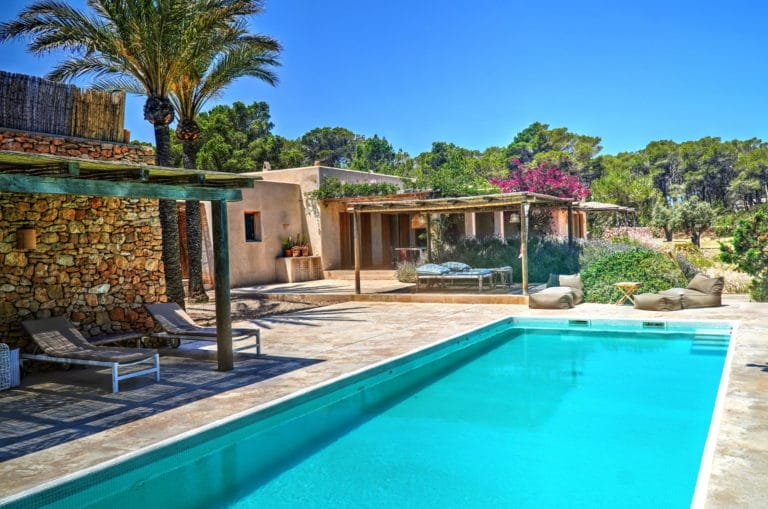
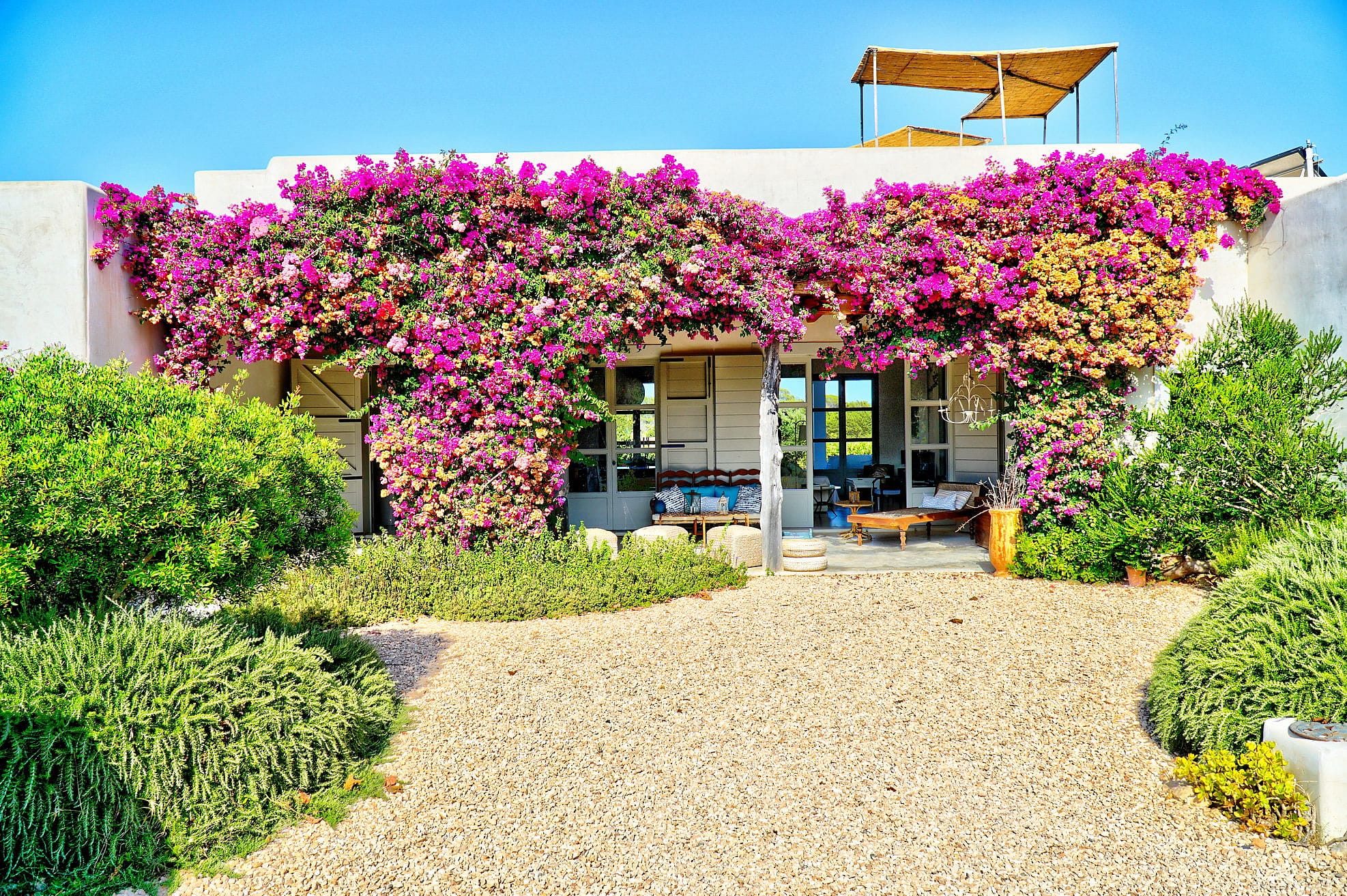
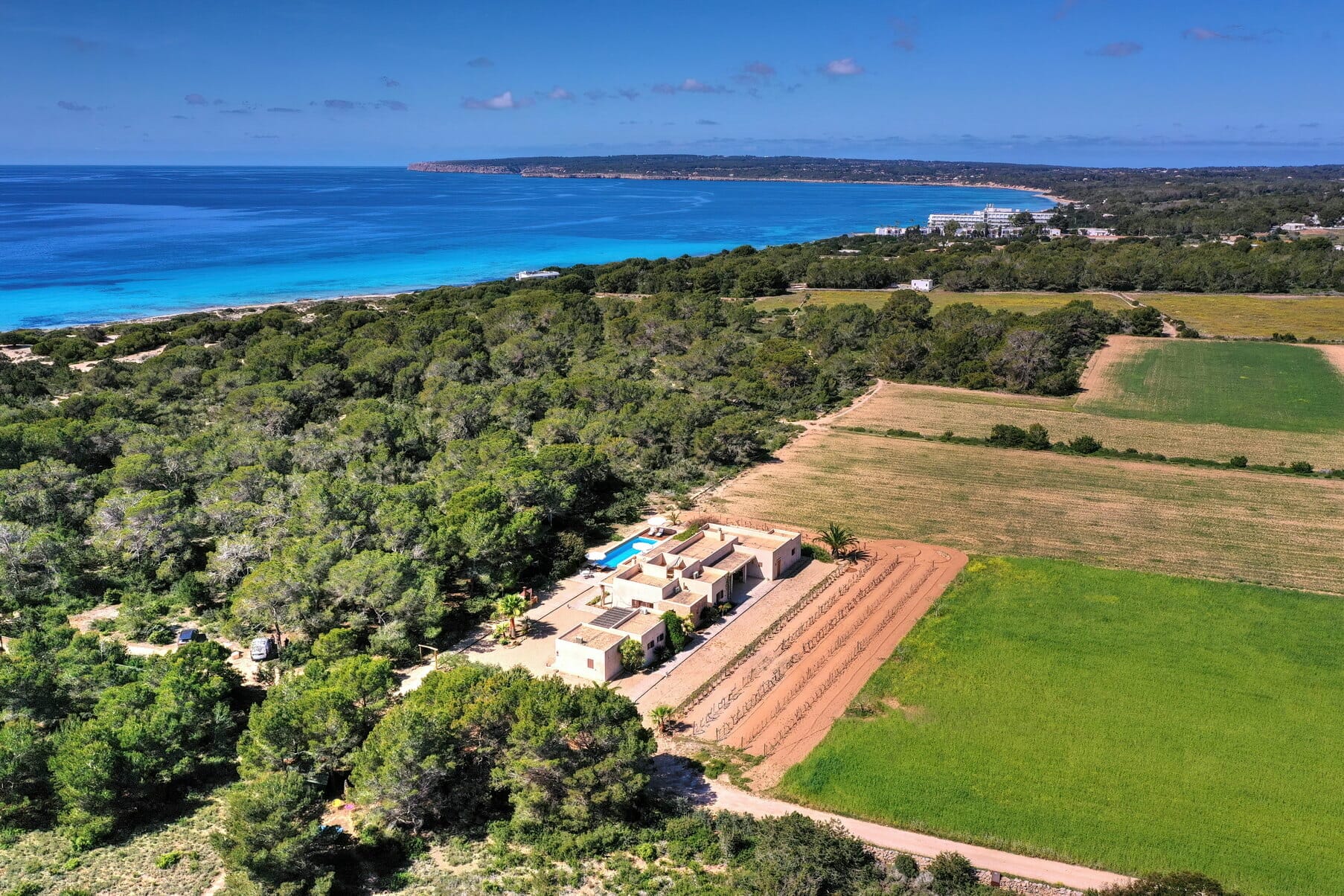
The traditional farmhouse on Formentera is called a payesa house. Using what the island had to offer, local families built each house with the intention of making it durable, pleasant, and functional, rather than esthetically pleasing.
Everything had a function; Nothing was meant to be seen.
Key features:
- The interiors are kept warm in winter and cool in summer thanks to thick stone walls coated with white lime.
- Flat or moderately sloped roofs that were originally used to collect rainwater.
- Local resources, such as juniper wood and limestone.
- Thanks to its modular design, the house can grow with the family over time.
- Protection from the sun and wind is offered by small windows and covered verandas (porxo).
- The final product is a robust and simple architecture that blends seamlessly with the environment.
📜 A historic residence
After long periods of abandonment caused by poverty and pirate invasions, Formentera began to be permanently repopulated in the 17th and 18th centuries, when most of these houses were built.
In the countryside, houses were built in the center of small, independent agricultural units.
Families gathered in a single location to live, work, raise livestock, store food, and pass down customs.
These scattered residences eventually gave rise to the pastoral environment that still characterizes much of Formentera today.
🏛 Importance for culture and heritage, a vivid memory.
The island’s ancient way of life, based on agriculture, patience, and respect for limited resources, is reflected in these houses.
Many residents have strong emotional ties to the past, as well as to family memories and anecdotes.
Vernacular Mediterranean architecture.
Mediterranean vernacular architecture is exemplified by the casas payesas, which are simple, ecological, and suited to their location.
More than in ornamentation, their beauty lies in their proportions, texture, and honesty.
Conservation and protection.
Many of these houses have been carefully restored and preserved, especially in rural areas and historic settlements like Sant Francesc Xavier. By keeping them intact, the island’s natural charm is protected from contemporary development.
🌍 Why are they important today?
Conventional farmhouses are not just outdated.
Nowadays:
- They explain the character and essence of Formentera.
- They influence rural and cultural landscapes.
- They encourage restoration efforts and sustainable architecture.
- They offer a more authentic and profound connection to the island.
- The spirit of Formentera must be preserved to protect these homes.