



Luxury tourism is changing Formentera: what it means for the real estate market
Formentera has always been the “authentic” island of the Balearics. No airport, no large chain hotels, no crowds. But something is changing — and those who want to invest need to understand it now.
The island that didn’t want to grow
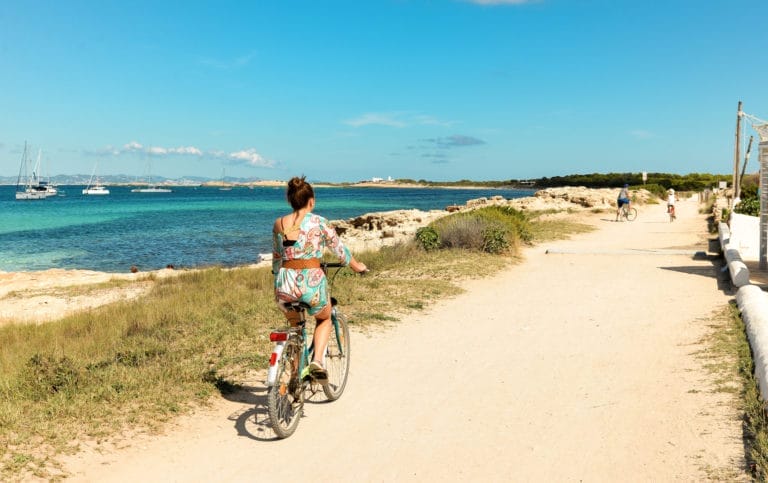
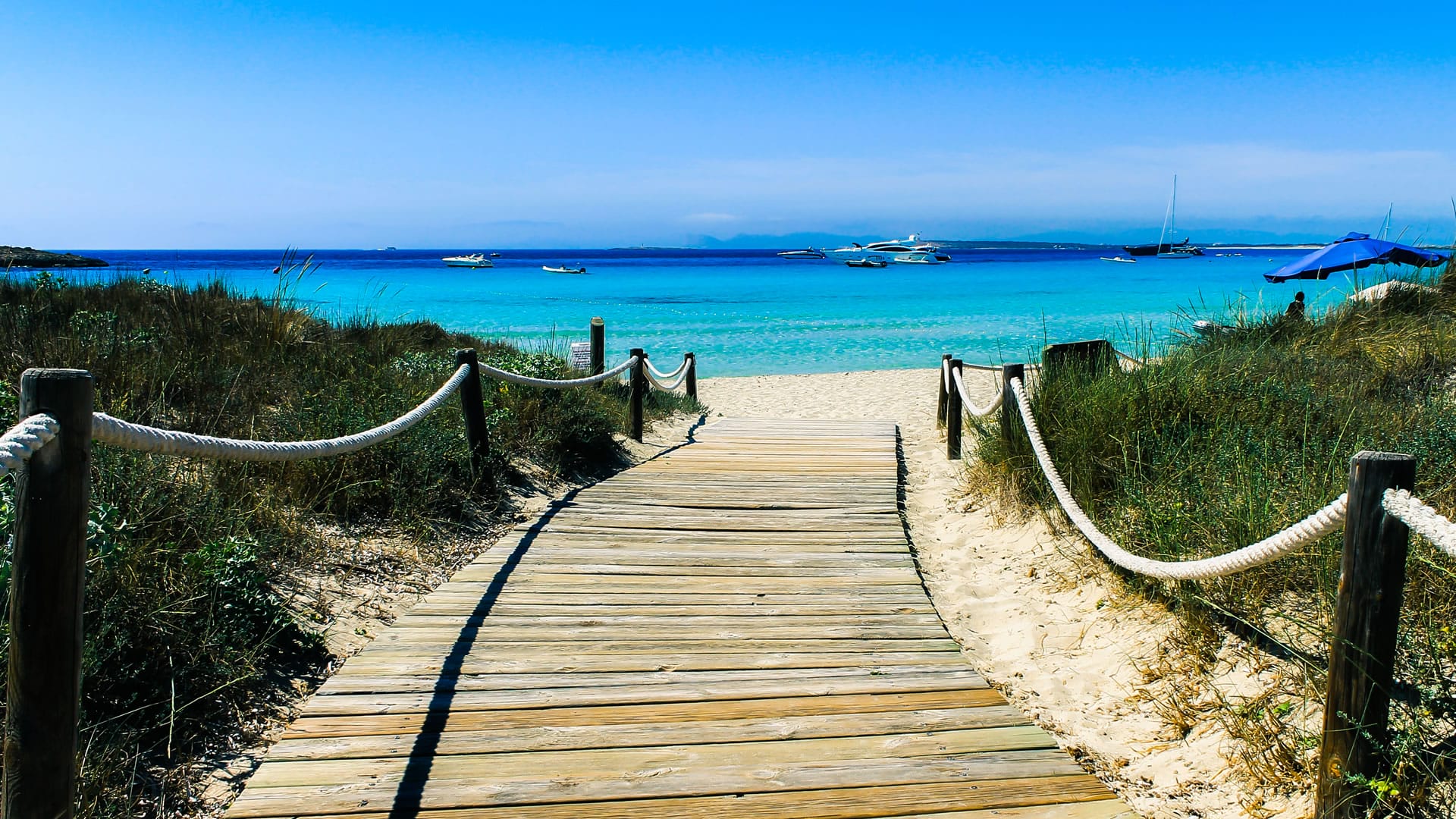
For decades, Formentera has built its identity on the opposite of ostentatious luxury. No five-star resorts, no VIP lounges, no branded megayachts. Only crystal-clear sea, pines, silence, and a conscious tourism that chose the island precisely for what it didn’t offer.
It was a model that worked. And many thought it was immutable.
It isn’t.
What’s really happening In the last five years, Formentera has undergone a silent but profound transformation. It didn’t come with big announcements or visible construction sites — it came through restaurant prices, boat charters, villas rented at 15,000 euros a week, and the names seen docked in the port of La Savina.
Some concrete signs:
The profile of the tourist has changed. Those who arrive today spend on average 40% more compared to ten years ago. Fewer backpacks, more Louis Vuitton suitcases.
The restaurant industry has transformed. Starred restaurants, international chefs, cocktail bars with Mykonos prices. The gastronomic offerings have made a huge qualitative leap.
The boat rental industry has exploded. Catamarans, tenders, and luxury boats have tripled their bookings. Formentera is increasingly reached by private boat, not by ferry.
Design boutique hotels have replaced the old guesthouses. Small establishments with 10-20 rooms, curated design, rates from 600 euros per night.
Why is it happening right now?
There are three factors that have accelerated this transformation.
1. The saturation of Ibiza.
Ibiza has become too noisy, too crowded, too commercial for a clientele that seeks true exclusivity. Formentera, just a 30-minute boat ride away, offers what Ibiza has lost: peace, unspoiled nature, and the feeling of being in a place that “not everyone knows.”
2. The post-pandemic period has redefined priorities. The post-pandemic period has redefined priorities.
The search for space, nature, and quality of life has driven a new generation of affluent buyers — often under 50, entrepreneurs, or digital professionals — towards destinations like Formentera. They are not looking for a hotel. They are looking for a house.
3. Building regulations create an artificial shortage. These construction restrictions also contribute to this created scarcity.
Formentera has some of the most restrictive urban and environmental regulations in Europe.
Almost nothing new can be built. This means that every existing property automatically becomes more valuable over time.
The impact on the real estate market
Here we are at the point that really matters to those considering an investment.
Prices have stopped being “reasonable.”
If until 2018 it was still possible to find villas in good condition for under a million euros, today that threshold has shifted significantly upwards. Properties with sea views or privileged access to the coast start at 2-3 million and easily reach 8-10 million for the most exclusive solutions.
The short-term rental market has become extraordinarily profitable.
A villa with a pool in Es Arenals or Illetes, well-located and with good management, can generate between 80,000 and 150,000 euros in net income in just three summer months. Clients in this segment book well in advance, pay substantial deposits, and leave the properties in excellent condition.
The market for ready-to-move-in properties is on the rise.
The new luxury buyer has neither the time nor the desire to manage renovations. They look for properties that are already ready, tastefully furnished, with home automation, an infinity pool, and professional management that takes care of everything. This has created a market niche where the value is not only in the location but in the quality of the experience that the property is able to offer.
Traditional fincas have greatly appreciated.
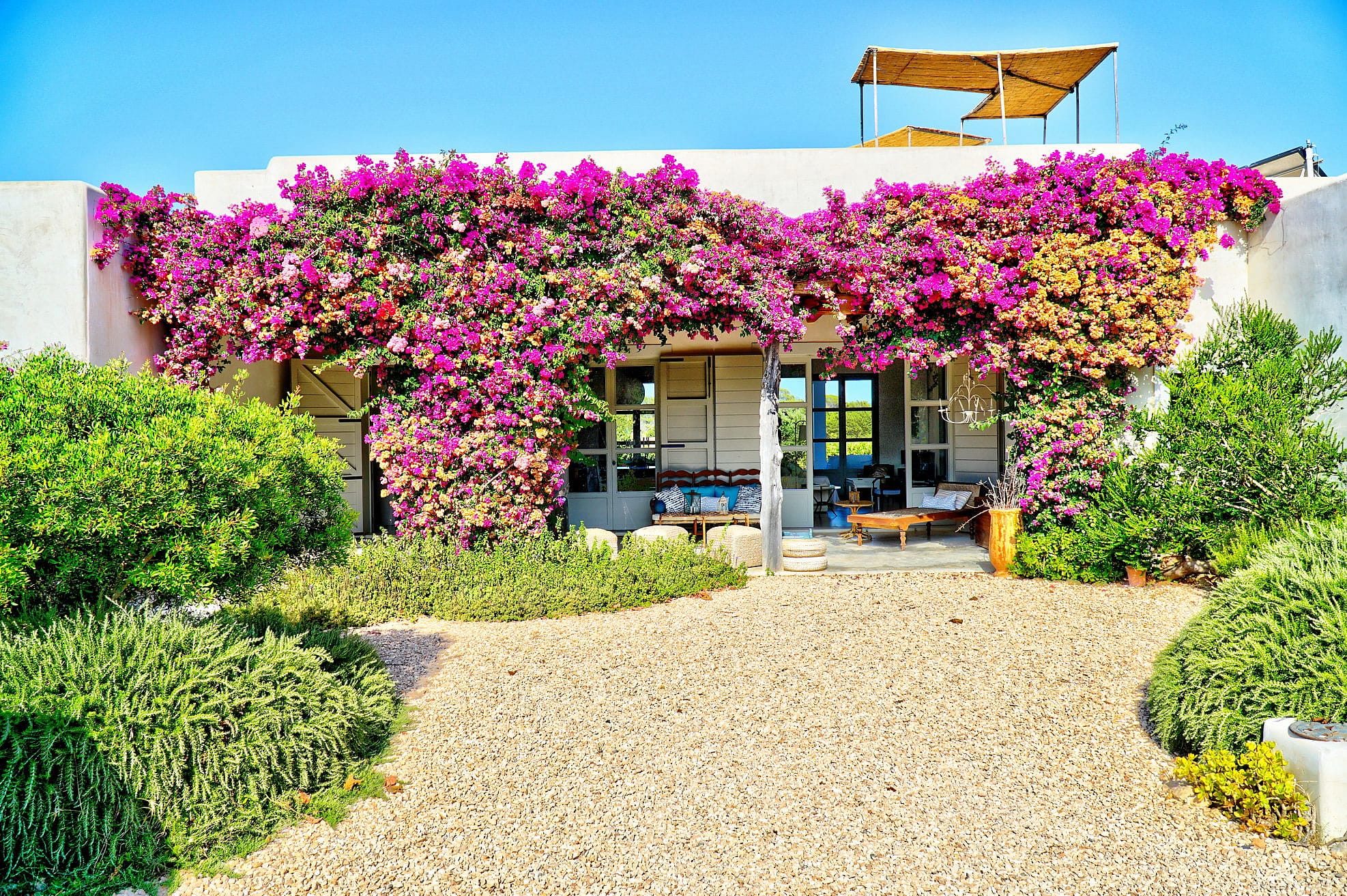
Paradoxically, the advance of luxury has made authenticity even more valuable. A well-restored stone finca, with local materials and a design that respects the island’s identity, is now worth much more than an anonymous modern construction. The high-profile buyer does not want to feel like they are in Dubai. He wants to feel like he’s in Formentera.
Areas to watch Not all markets move in the same way. Some areas are attracting more interest than others:
Illetes and Llevant — the most sought-after area, with prices reflecting the proximity to the island’s most famous beaches
Es Arenals — rapidly growing, a good balance between accessibility and quality of life
La Mola — the most authentic inland area, appreciated by those seeking absolute privacy and silence Sant Francesc Xavier — the island’s beating heart, evolving commercially and residentially
What it means for those who want to invest today
The message is simple: the window is closing.
Not in the sense that the island will become inaccessible tomorrow morning, but in the sense that each passing year reduces the number of properties available at prices still competitive compared to the value they will express in five years.
Luxury tourism brings with it an inevitable consequence: raises the standard for everyone. It raises rental prices, raises the perceived value of the island, raises the quality of services — and consequently raises the value of properties.
Those who bought in Formentera ten years ago already know this.
Conclusion
Formentera will never become Ibiza. It doesn’t have the infrastructure, it doesn’t have the political will, it doesn’t have the numbers to do it. And this is exactly its strength.
But the island is growing upwards, not downwards. It is becoming more exclusive, not more mass-market. And in a real estate market so limited in supply and so growing in demand, this means only one thing for the attentive investor: the best time to enter is now.
Do you want to know which properties are available today in Formentera?